A child in Chicago writes to Santa Claus, a child in Florence to Babbo Natale, a child in Helsinki to Joulupukki. In Moscow the letter goes to Дед Мороз, and in Athens the visitor is called Άγιος Βασίλης and only shows up on January 1. Behind some of these names stands the same man in the red coat. Behind others is a figure who has very little in common with him.
None of these names is a random translation. Each one carries a piece of local history: a fourth-century bishop, a straw goat, a farmyard gnome, an old man of winter, a saint from Cappadocia. Sorting them out explains why Santa does not arrive everywhere on the same night, or with the same baggage. For the other gift bringers (the Befana, the Christkind, the Three Kings), see our guide to who brings presents around the world.
Why does Santa have so many names?
Almost every name for Santa falls into one of four families. The first is the saint: Sinterklaas in the Netherlands, Święty Mikołaj in Poland, Άγιος Βασίλης in Greece. The second makes him a "father" or a "man" of Christmas: Father Christmas, Père Noël, Babbo Natale, Weihnachtsmann, Kerstman. The third ties him to winter, like Russia's Дед Мороз, "Grandfather Frost," or Hungary's Télapó, "Father Winter." The fourth comes from old Nordic beliefs: a goat in Finland, a farm gnome in Norway and Sweden.
The English name belongs to the first family. Santa Claus is a reshaping of Sinterklaas, the Dutch name for Saint Nicholas, bishop of Myra in the fourth century. A form of it, "St. A Claus," turns up in the New York press as early as 1773, and a Dutch poem printed in New York by John Pintard in 1810 still spells it "Sancte Claus." The full story of that transformation is in the true story of Santa Claus.
The name often gives away the date, too. A saint arrives on his feast day: December 6 for Nicholas, January 1 for Basil. A "Christmas man" comes on the night of the 24th. Grandfather Frost works New Year's. If you know what a country calls Santa, you nearly always know when its children open their presents.
Father Christmas, Babbo Natale, Papá Noel: the "father" names
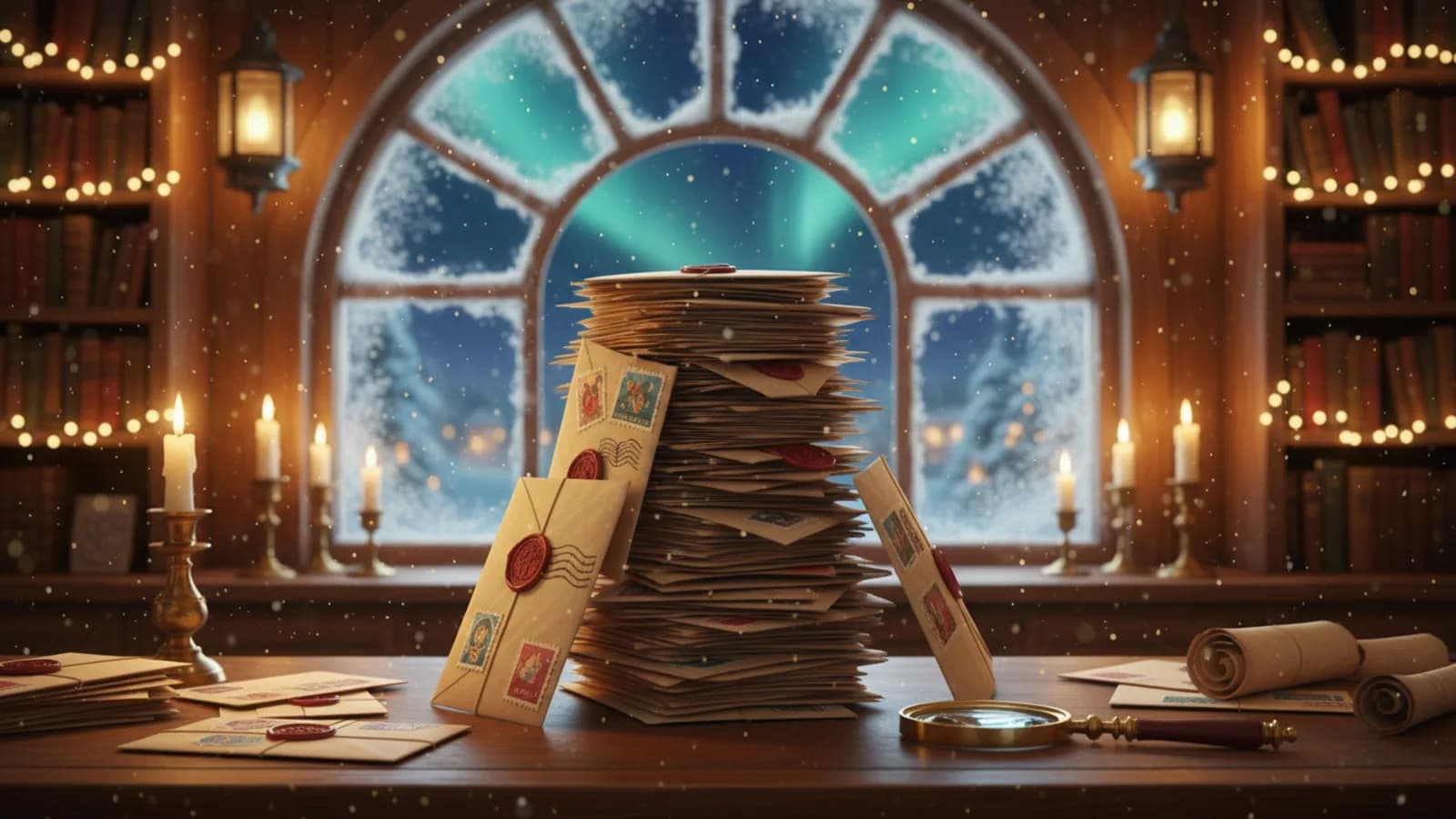
In the United States the name is simply Santa Claus, or Santa and Saint Nick, and the Post Office has been answering his mail since 1912, the year USPS counts as the start of Operation Santa (a first permission dates from November 1911). France says Père Noël, and La Poste has answered his letters since 1962, a service set up under Postal Minister Jacques Marette and with the help of his sister, the pediatrician and psychoanalyst Françoise Dolto. Now run from Libourne, near Bordeaux, as the Secrétariat du Père Noël, it receives more than a million letters a year. Children here can send theirs through our letter page.
England has its own figure, older than Santa Claus: Father Christmas. In 1616, in *Christmas, His Masque*, Ben Jonson has him speak as a behind-the-times old man in outdated clothes. In the Victorian era he became a symbol of good cheer, then gradually merged with the American Santa Claus. British children today use both names without drawing any line between them.
I am old Gregorie Christmas still.
Italian says Babbo Natale. The Treccani dictionary notes that *babbo* is a familiar, affectionate word for "dad," especially common in Tuscany, and describes Babbo Natale as a bearded old man in red clothes trimmed with white who brings presents to children. Portuguese says Pai Natal, the Spanish of Spain and Argentina Papá Noel, Catalan Pare Noel. In Brazil it is Papai Noel, also nicknamed Bom Velhinho, the "good little old man."
- Wales: Siôn Corn, literally "Chimney John"
- Ireland (in Irish): Daidí na Nollag, "Daddy Christmas"
- Denmark: Julemanden, "the Christmas Man"
- Croatia: Djed Božićnjak, "Grandfather Christmas"
- Chile: Viejito Pascuero, literally "the little old Easter man"
- China: 圣诞老人 (Shèngdàn Lǎorén), "Old Man Christmas"
- Japan: サンタクロース (Santa Kurōsu), which children often shorten to サンタさん (Santa-san)
Japan kept the English name almost unchanged, written in katakana, the script used for foreign words. The suffix *-san*, added to the name of an adult you respect, is all it takes to make the visitor feel like a family acquaintance.
What is Santa called in German and Dutch?
In German, Santa is der Weihnachtsmann, "the Christmas Man." He is mostly found in northern, central and eastern Germany. August Heinrich Hoffmann von Fallersleben's song *Morgen kommt der Weihnachtsmann*, written around 1835 to 1840, made him popular. In 1848 the painter Moritz von Schwind published a "Herr Winter" in the *Münchener Bilderbogen*, a stern figure people keep at arm's length, often listed among the character's ancestors.
In the Catholic parts of the German-speaking world (southern Germany, Austria, part of Switzerland) he is not the one who brings the gifts. That job belongs to the Christkind, the Christ Child. In Austria, the post office at Christkindl, a district of Steyr, has collected letters to the Christ Child since 1950. Americans turned the diminutive *Christkindl* into Kris Kringle, which by 1845 was a common name for Santa in parts of the United States.
In the Netherlands and Flanders, the language keeps two characters apart. The Kerstman, "the Christmas Man," is the American-style Santa. Sinterklaas is Saint Nicholas, and he is the big giver: gift night, *pakjesavond*, falls on December 5. He arrives by steamboat in mid-November, on the first Saturday after November 11, in a port that changes every year. His white horse Amerigo was retired in 2019 and replaced by Ozosnel.
The book that fixed Sinterklaas's image is an 1850 picture book, *Sint-Nicolaas en zijn knecht* ("Saint Nicholas and His Servant"), written by the schoolteacher Jan Schenkman, which likely helped turn the feast into a children's holiday. The servant, Zwarte Piet, has been debated since the 2010s, and many Dutch media now show him with a few smudges of soot instead: he is then called a *roetveegpiet*.
Joulupukki, Julenissen, Jultomten: why a goat and a gnome?
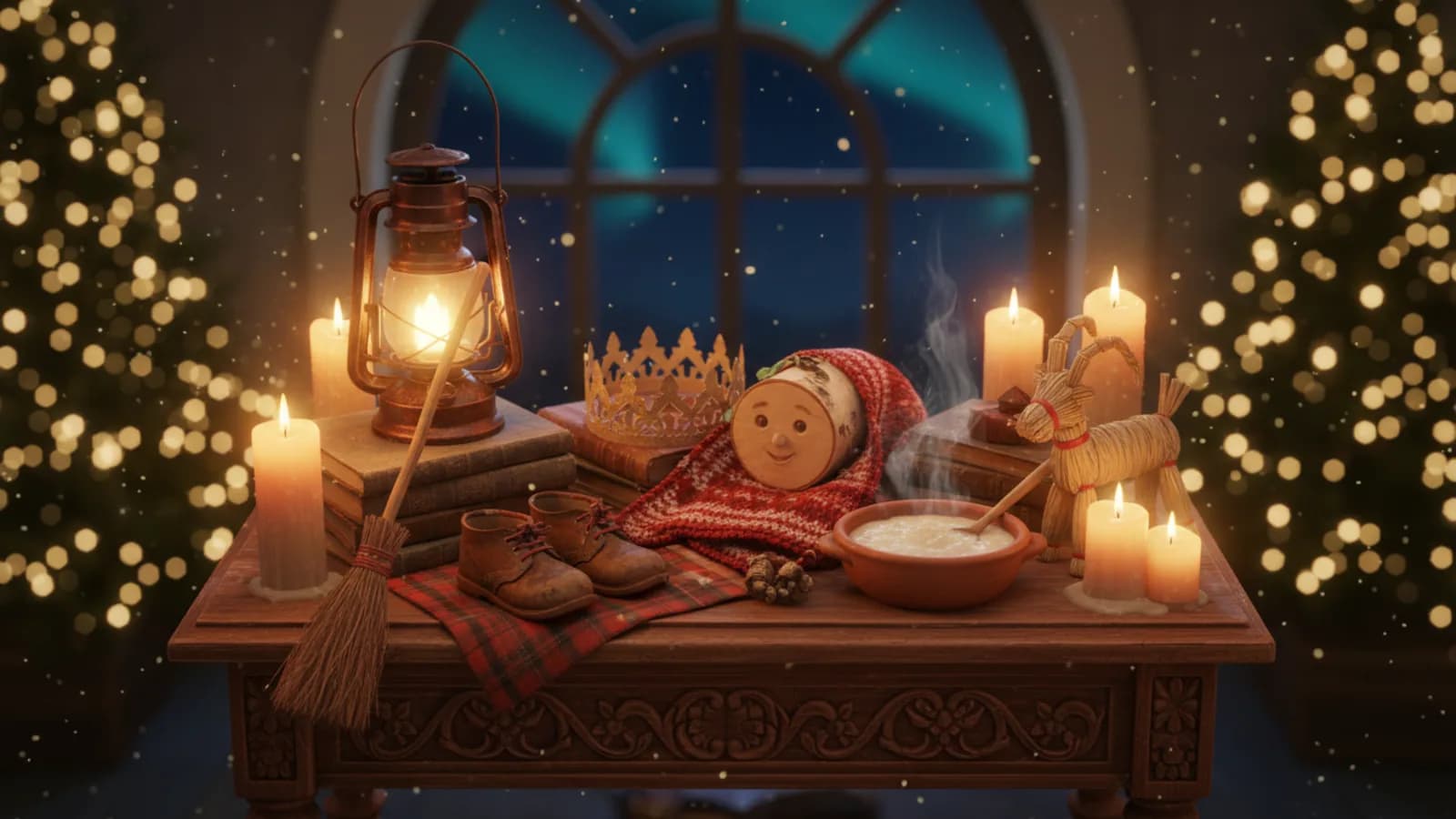
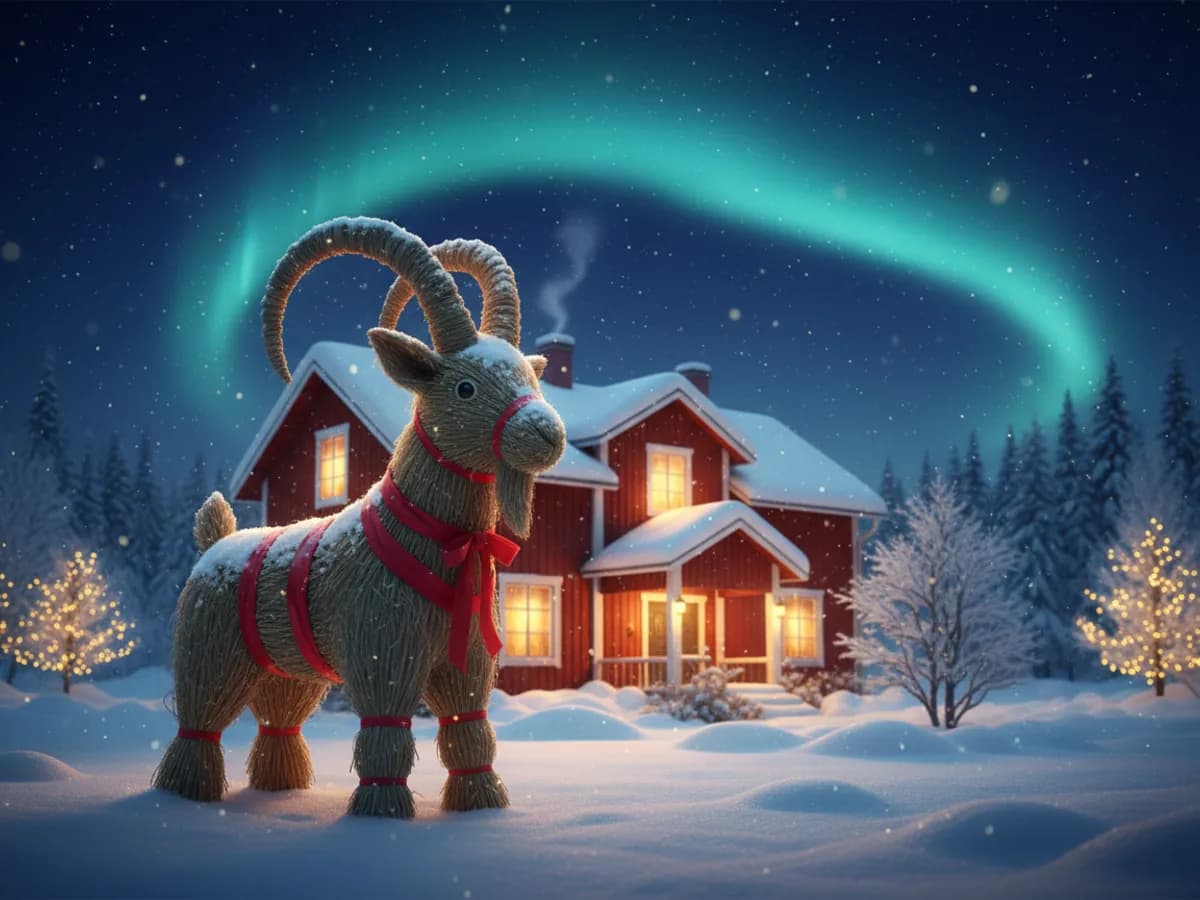
The Finnish name always surprises people: Joulupukki means "Christmas goat" or "Yule goat." It comes from a folk custom, the *nuuttipukki*: a man, often an older one, dressed as a goat went from house to house and was given the leftovers of the Christmas meal. The figure eventually lost his horns and grew a white beard, but the name stuck. He is said to have a wife, Joulumuori, "Old Lady Christmas," though tradition says little about her.
Radio gave him an address. In 1927, Markus Rautio, a presenter on Finland's Yle radio, announced that Joulupukki lived on Korvatunturi, a fell in Lapland whose name means "Ear Fell." Korvatunturi sits on today's border between Finland and Russia. For the rest of that geography, from Rovaniemi to the North Pole, see where Santa Claus lives.
Norway waits for Julenissen, Sweden for Jultomten. Both names come from the *nisse* or *tomte*, the little spirit that watched over the farm: *tomte* means roughly "homestead man." At first nobody asked him for anything; people fed him, with a bowl of porridge and a pat of butter on top, which Norwegians have since swapped for rice pudding. In Denmark in the 1840s, artists such as Lorenz Frølich and Johan Thomas Lundbye turned them into *julenisser*, bringers of presents.
The Swedish tomte's face comes from one illustrator. In 1881 Jenny Nyström drew the *Tomten* of poet Viktor Rydberg with a white beard and a red cap, reportedly modeling him on her own father. Sweden had another gift bringer before him, too: the julbock, the Christmas goat, which held the job until the 19th century.
What is Santa called in Russia and Eastern Europe?
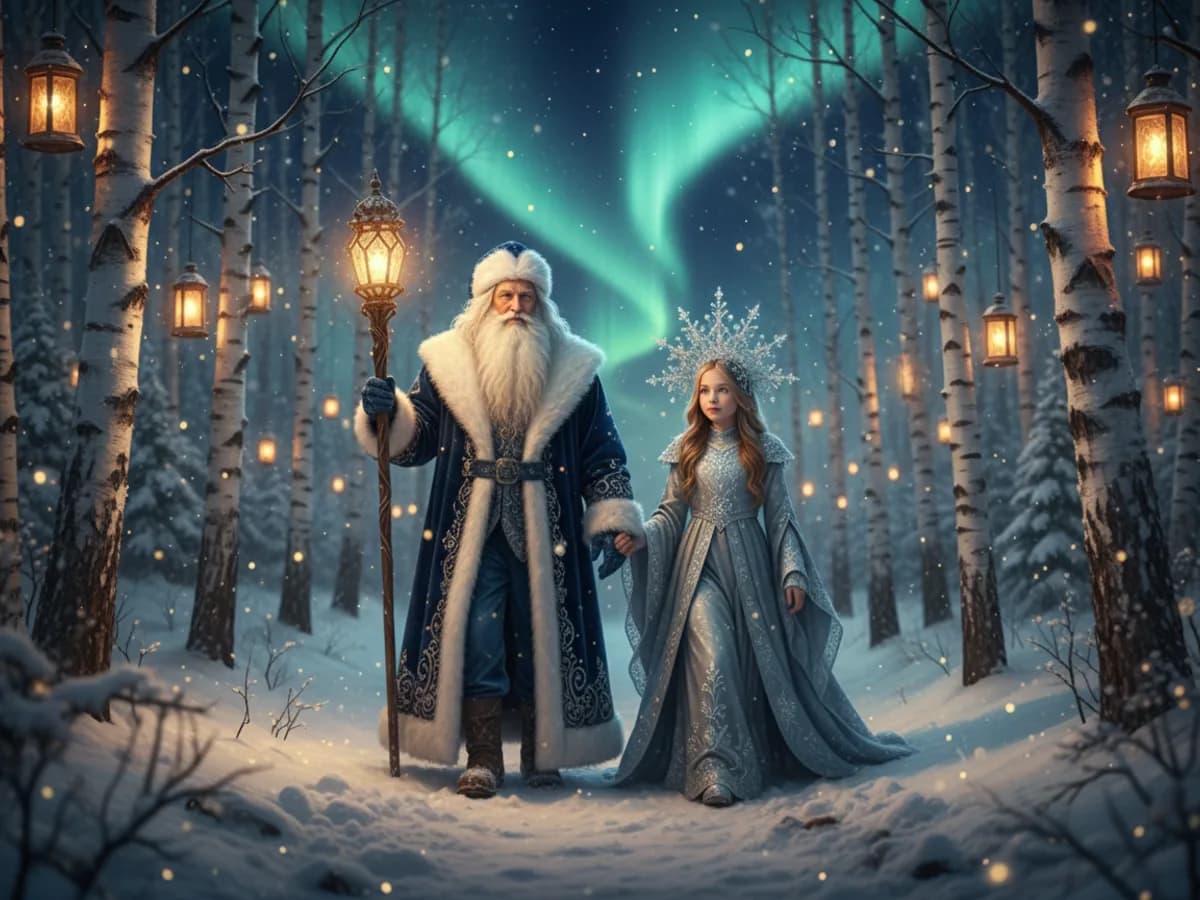
In Russia he is Дед Мороз (Ded Moroz), literally "Grandfather Frost." He doesn't come at Christmas but at New Year's, and he travels with his granddaughter Снегурочка (Snegurochka), the Snow Maiden, in long silver-blue robes. His career has been eventful. In 1928 the Soviet authorities declared him "an ally of the priest and the kulak." On December 28, 1935, a letter by Pavel Postyshev in *Pravda* reopened the door to New Year celebrations, and Ded Moroz came back.
He has an address today: in 1998 the mayor of Moscow, Yury Luzhkov, declared the town of Veliky Ustyug, in Vologda Oblast, the official home of the Russian Ded Moroz. Belarus gave him a second house, in Belovezhskaya Pushcha National Park.
The name followed the political map of the 20th century. After 1948, communist Romania introduced Moș Gerilă, a direct adaptation of Ded Moroz, alongside the traditional Moș Crăciun, "Old Man Christmas." In Bulgaria, the Дядо Мраз (Dyado Mraz) imported from Russia sits beside Дядо Коледа (Dyado Koleda), the traditional Grandfather Christmas.
- Ukraine: Дід Мороз (Did Moroz)
- Belarus: Дзед Мароз (Dzied Maroz)
- Poland: Dziadek Mróz, alongside Święty Mikołaj (Saint Nicholas) and the Gwiazdor
- Czech Republic: Děda Mráz, though the presents come from Ježíšek, Baby Jesus, and Svatý Mikuláš
- Croatia: Djed Mraz; Serbia: Деда Мраз (Deda Mraz); Bosnia: Djeda Mraz; Slovenia: Dedek Mraz
- Hungary: Télapó, "Father Winter," and Mikulás, Saint Nicholas, in early December
Why is the Greek Santa named Basil?
In Greece the gift bringer is Άγιος Βασίλης (Agios Vasilis), the everyday form of Άγιος Βασίλειος ο Μέγας, Saint Basil the Great. Basil was bishop of Caesarea, in Cappadocia, and died there on January 1 or 2, 379. His feast falls on January 1, so that is the day, not December 25, when Greeks traditionally gave each other presents.
The New Year's cake carries his name: the vasilopita. The legend says tax collectors had taken the jewelry of the people of Caesarea. Basil forced them to give the gold back, but nobody could tell anymore what belonged to whom. So he baked the gold into a large cake and handed out the slices, and everyone found their own. To this day a coin is slipped into the dough before baking. The vasilopita is cut late on December 31 or on January 1, a slice for each family member and often one for Christ and one for Saint Basil, and whoever finds the coin has luck all year.
What do Mexicans and Canadians call Santa?
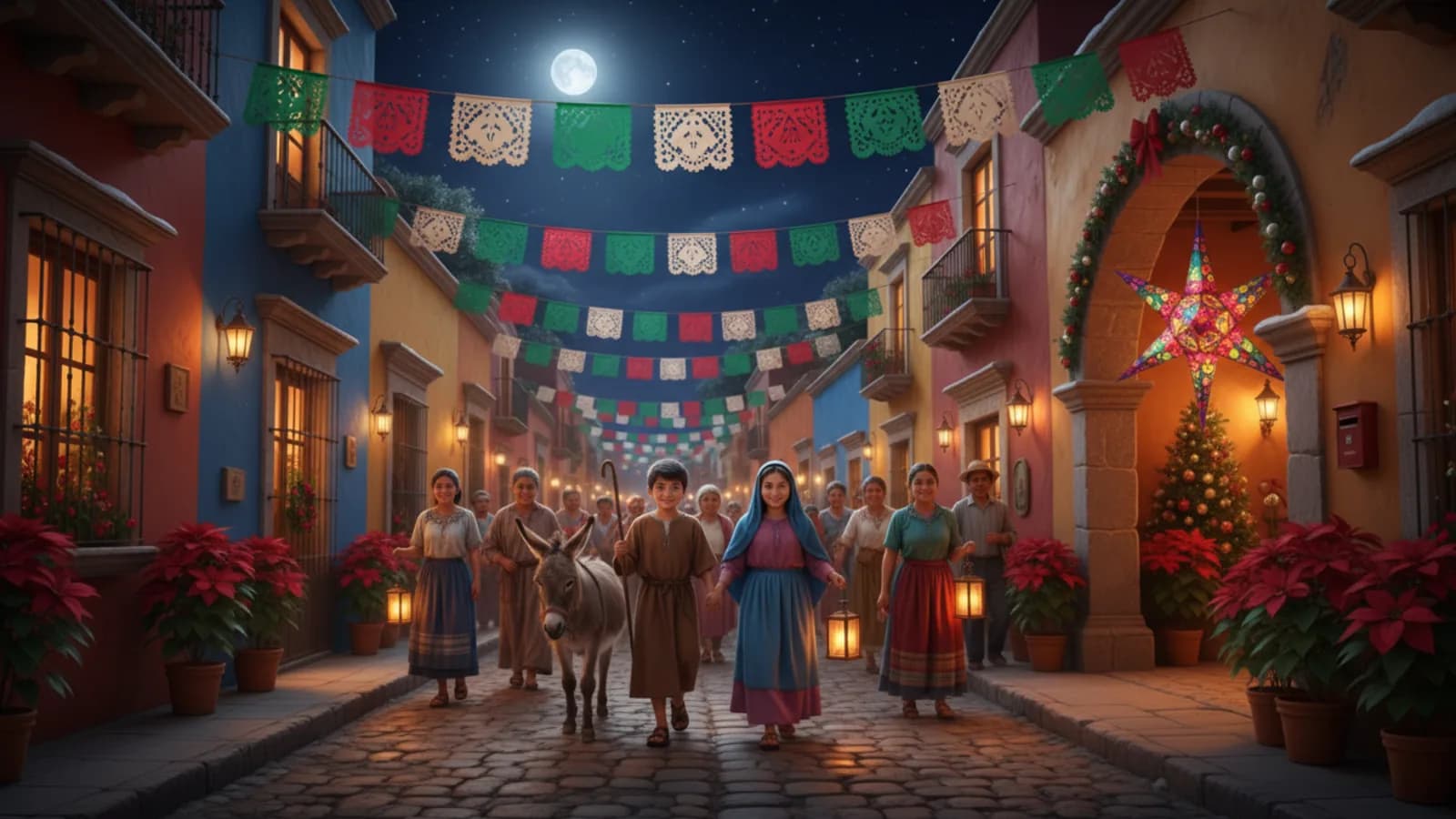
In Mexico people simply say Santa Claus, keeping the English name. But he isn't alone: children also wait for El Niño Dios, the Christ Child, and above all for los Tres Reyes Magos, the Three Kings, who come on the night of January 5. That evening many children leave a shoe by the door. Some tuck a letter into a helium balloon and let it go into the sky. An academic interviewed by UNAM, Mexico's national university, put it plainly: "we also have the Anglo-Saxon tradition of Santa Claus," yet Three Kings' Day still closes the season.
Mexico's postal service plays along with both. Every December the Palacio Postal in Mexico City, on Tacuba Street, becomes the "Palacio de los Deseos," and Christmas mailboxes go up in 337 post offices across the country. Santa Claus has an address with a postal code, Calle Regalo No. 5, Colonia Nieve, Alcaldía Polo Norte, C.P. 00695, and the Three Kings have one of their own. Correos de México receives about 22,000 letters a year on average, and 19,365 replies went out in 2019.
In Canada the name depends on the language: Santa Claus in English, Père Noël in French. Both share what may be the most famous address in the world: Santa Claus, North Pole, H0H 0H0, Canada. Canada Post has been answering children for more than forty years, in the language of their letter. The program gets more than a million letters a year and runs on volunteers, current and retired postal employees; by 2012 it had already answered more than 20 million letters in thirty years.
Canada went further than anyone else: on December 23, 2008, the federal government granted Santa Canadian citizenship. In the United States, the old Kris Kringle lives on in movies and songs, and in Hawaiian Santa becomes Kanakaloka.
Sources
- Wikipedia, Santa Claus (etymology, Sinterklaas, Kris Kringle, Operation Santa, Canadian citizenship)
- Wikipedia, List of Christmas and winter gift-bringers by country
- Wikipedia, Father Christmas (Ben Jonson, 1616)
- Treccani, Vocabolario, "babbo"
- Treccani, Vocabolario, "natale" (Babbo Natale)
- Wikipedia (German), Weihnachtsmann
- Wikipedia, Sinterklaas
- Wikipedia, Joulupukki
- Yle, Markus Rautio and Korvatunturi, 1927
- Wikipedia, Nisse (folklore)
- Visit Iceland, Meet the Icelandic yule troll family
- Wikipedia, Ded Moroz
- Greek Herald, The Greek Father Christmas: Santa Claus or Saint Basil the Great?
- Wikipedia, Vasilopita
- UNAM Global, Los Reyes Magos seguirán existiendo
- Expansión Política, Correos de México letters to Santa Claus and the Three Kings, 2021
- Wikipedia, Christmas in Mexico
- Canada Post, Santa letter program
- Canada Post, A message from the most famous post office in the world, 2012
- CIDJ, Depuis longtemps, la lettre au Père Noël enchante les fêtes