He left no writings. No chronicler of his own time mentions him. Yet thousands of churches carry his name, his bones sent a crew of Italian sailors across the Mediterranean, and every December, in a small town in eastern France, thousands of candles are lit for him one by one in a basilica plunged into darkness.
Saint Nicholas is Santa Claus’s direct ancestor, but he also has a life of his own, far older and stranger. Our archivists have sorted his file into three piles: what historians consider solid, what the legends added century after century, and what you can still see today in Bari, in Nancy and in Saint-Nicolas-de-Port.
What do we actually know about Saint Nicholas?
Very little, and that is the first surprise in the file. According to tradition, Nicholas was born around 270 in Patara, a port in Lycia on the southern coast of present-day Turkey. The St. Nicholas Center reports that his parents, wealthy Christians, died in an epidemic while he was young, and that he gave his inheritance to the poor and the sick. He became bishop of the nearby city of Myra while still a young man.
The same tradition says he was persecuted under the emperor Diocletian, exiled and imprisoned for his faith. Once freed, he is said to have attended the Council of Nicaea in 325. He died in Myra on a December 6, in 343 by the most commonly cited date, and was buried in his church.
Historians tread carefully on almost every line. Nicholas only shows up on a list of the bishops at Nicaea in the early sixth century, in Theodore the Lector, around 510 to 515, and neither Athanasius nor Eusebius, who both wrote about the council, mentions him. Some historians doubt he was there at all, while the St. Nicholas Center counts Theodore's list as the most important authentic record of who attended. The famous story that he slapped the heretic Arius in mid-session is first recorded in the 14th century, more than a thousand years later.
The texts themselves come late. Around 583, Eustratius of Constantinople quotes a Life of Saint Nicholas that is now lost. The oldest complete Life to survive was written by Michael the Archimandrite in the early ninth century, between 814 and 842, nearly five hundred years after the bishop’s death. For the historian Jeremy Seal, the best evidence that Nicholas was real remains his tomb, which pilgrims could visit in Myra.
What is the legend of the three daughters and the gold?
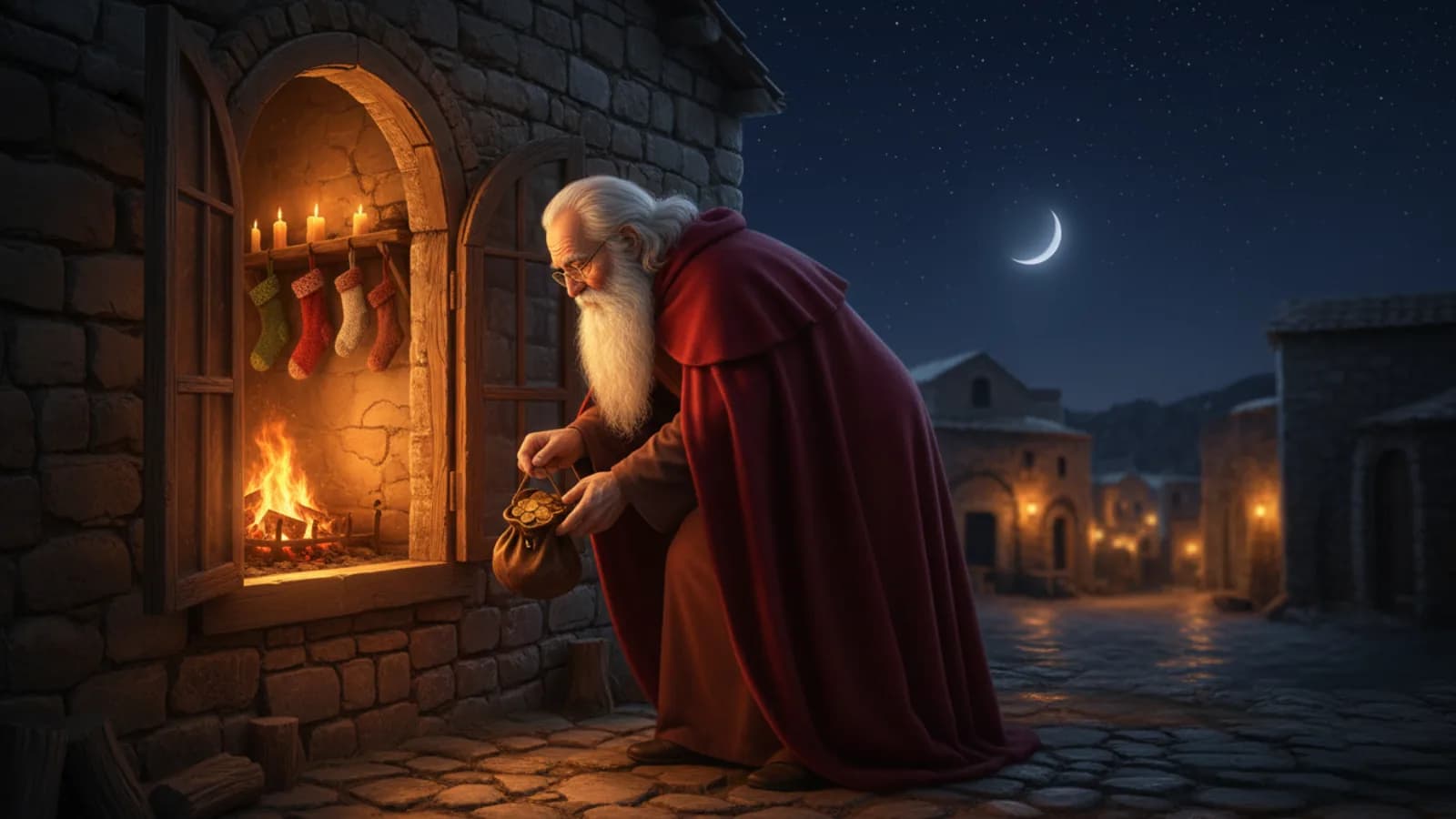
It is the oldest of the legends, and the only one already present in Michael the Archimandrite’s ninth-century Life. A ruined man in Myra cannot provide dowries for his three daughters. Without a dowry there is no marriage, and the threat hanging over the girls is that they will be sold. One night, a purse of gold sails through the open window. Then a second, on another night. The third time, the father keeps watch and recognizes the bishop, who asks him to keep the secret.
The St. Nicholas Center notes that in some versions the gold lands in stockings or shoes drying by the fire. Others tell of three gold balls rather than three purses. Those three balls became one of the saint’s emblems in paintings and stained glass, sometimes shown as oranges, which is one reason oranges still turn up in children’s stockings and shoes. They also made Nicholas the patron of pawnbrokers and of young women hoping to marry.
Historians argue over the story. Adam C. English defends the idea of a real core. Jona Lendering points out how closely it resembles the tales Philostratus told about Apollonius of Tyana, a first-century sage, and thinks it may have drifted from one figure to the other. What is certain is that it lasted: the stocking hung by the fireplace comes straight from it, as we explain in the history of Christmas stockings.
Where does the story of the three boys and the butcher come from?
In France, this is the story every child knows, and yet it is one of the latest. It is missing from the early Lives of the saint and appears at the end of the Middle Ages. In the first versions the victims are not children but three young traveling students, murdered by an innkeeper. The St. Nicholas Center explains that the version with three little children is the one that took hold in France.
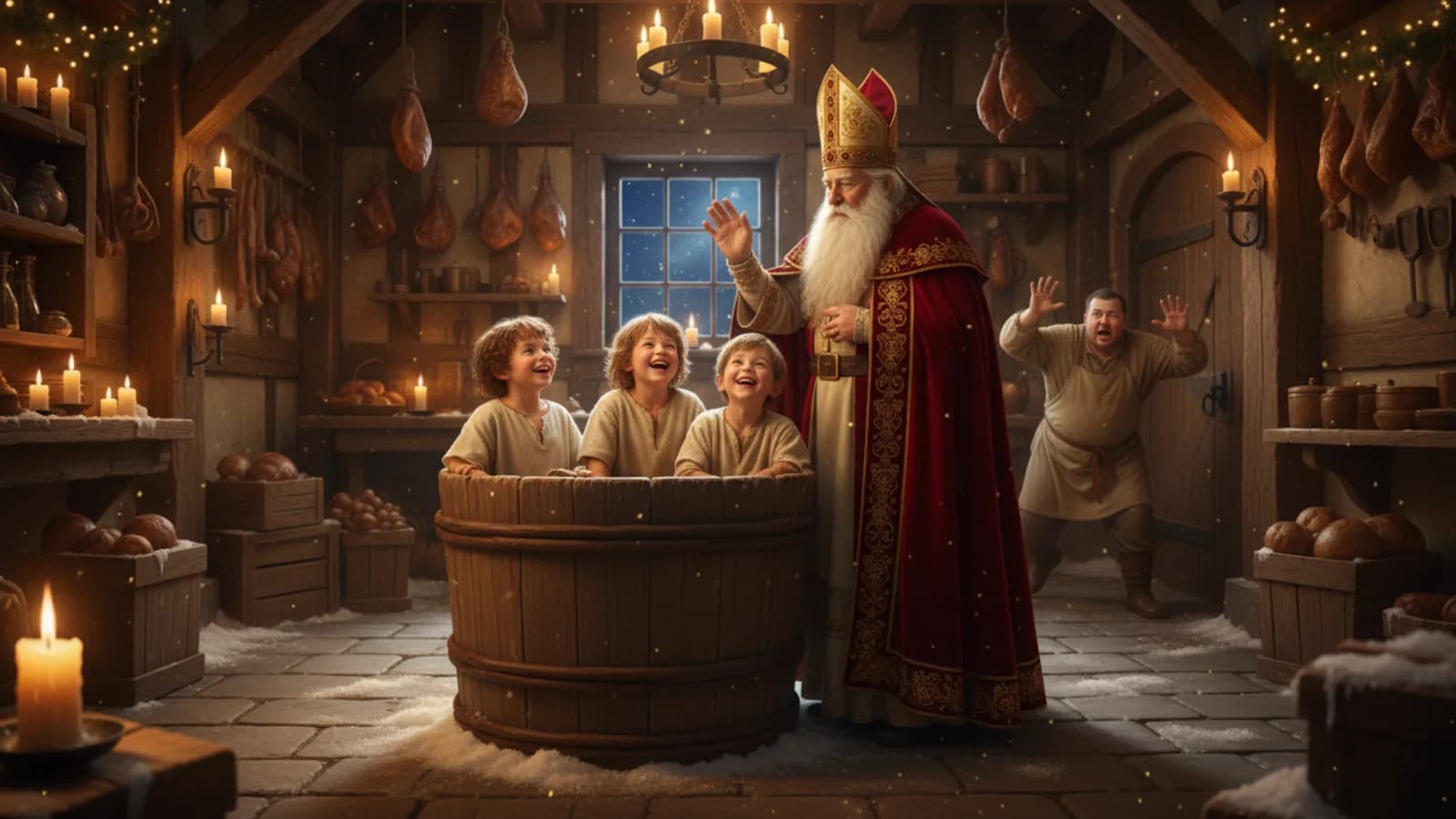
The French song "Ils étaient trois petits enfants," still sung in schools, goes back to the 16th century. Three children out gleaning in the fields ask a butcher to lodge them for the night. He kills them, cuts them up and puts them in his salting tub, the brine barrel used to preserve meat. Seven years later, Saint Nicholas passes by and asks for a bed. The butcher offers him dinner, but the bishop asks for the salted meat that has been waiting seven years. The butcher runs, the saint calls him back to repent, stretches three fingers over the tub, and the three children stand up alive.
Three little children sought the plain / Gleaners of the golden grain.
This legend is what made Nicholas the protector of children. In eastern France he never travels alone: Père Fouettard, "Father Whipper," a man dressed in black, threatens naughty children while the saint hands out treats. In the Nancy parade, the butcher from the song even rides his own float, just ahead of Fouettard. In the Netherlands and Belgium the saint has other companions, whom we introduce in Christmas gift bringers around the world.
The other miracles in the file
- The three innocent men: already in Michael the Archimandrite’s Life, Nicholas stops the executioner’s sword and saves three men wrongly condemned. That is why he is the patron of victims of judicial error.
- The storm: returning from a voyage to the Holy Land, he calms a sea that threatens his ship. Sailors across the Mediterranean adopted him as their patron.
- Basilios: a boy kidnapped by pirates from Crete is carried home to Myra, still holding the golden cup of the king he had been forced to serve.
Why is Saint Nicholas Day on December 6?
Because it is the day he died. The Church honors its saints on the date of their death, seen as their birth into heaven, rather than on their birthday, which in Nicholas’s case is unknown anyway. Churches that follow the Julian calendar, such as the Russian Orthodox Church, celebrate him on December 19 by our calendar. Bari adds a second feast, from May 7 to 9, for the arrival of his relics.
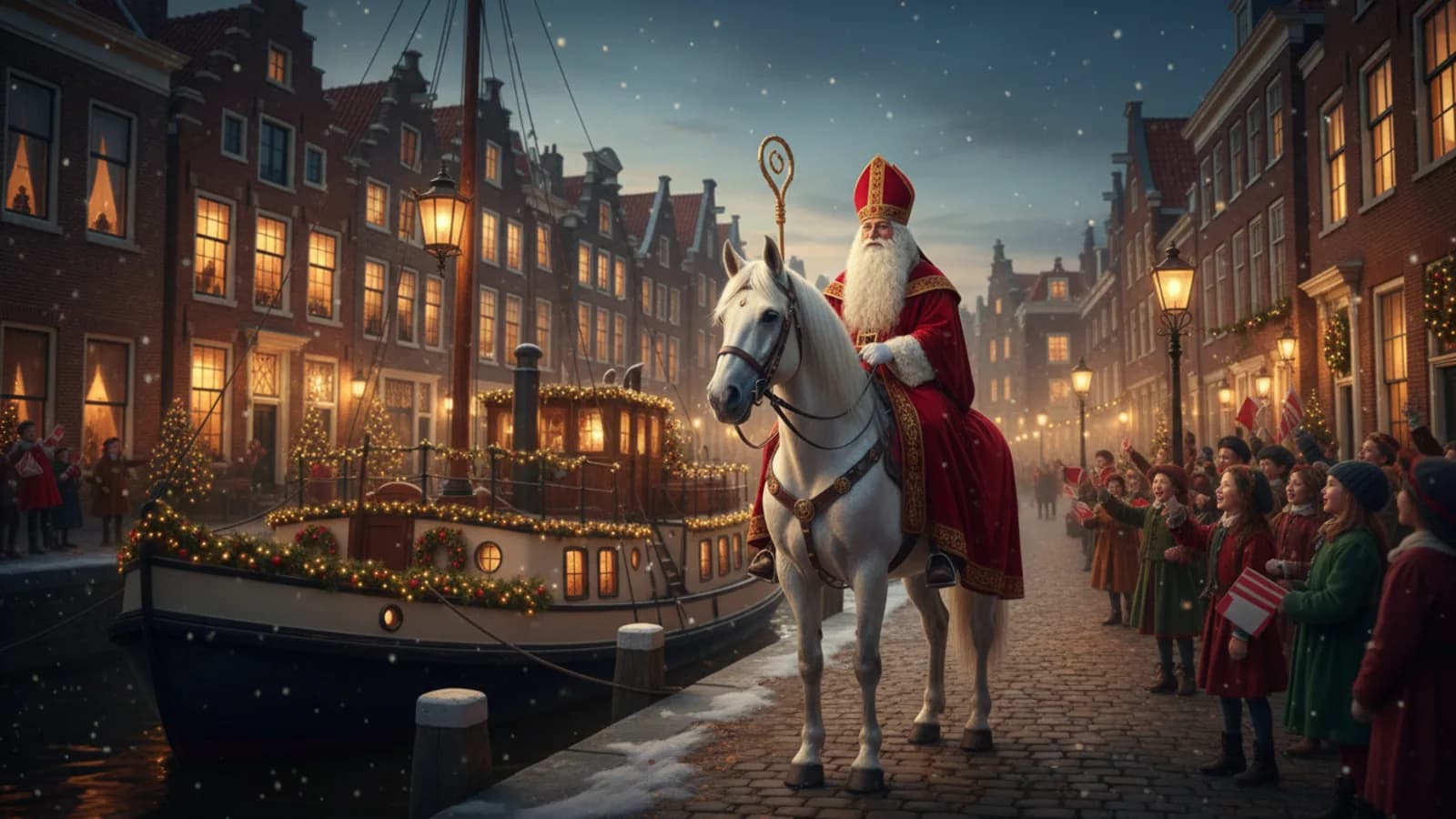
According to the French Ministry of Culture’s intangible heritage inventory entry on the Nancy festivities, Saint Nicholas Day is kept on December 6 in Belgium, the Netherlands, Germany, Luxembourg, Switzerland and Italy, as well as in Orthodox countries. In France it remains strong in Lorraine, Alsace, Franche-Comté and the far north. In the Netherlands and Belgium, the saint often arrives by boat and rides through town on a white horse, looking for the shoes children have left by windows, doors or fireplaces.
In Lorraine, on the morning of December 6 or the closest weekend, good children find treats, and those who left a sugar lump or a carrot for the saint’s donkey the night before know why the plate is empty. Moving that visit to the night of December 24 happened much later, in New York, in the early 19th century: that is the subject of the true story of Santa Claus.
How did Saint Nicholas’s bones end up in Bari?
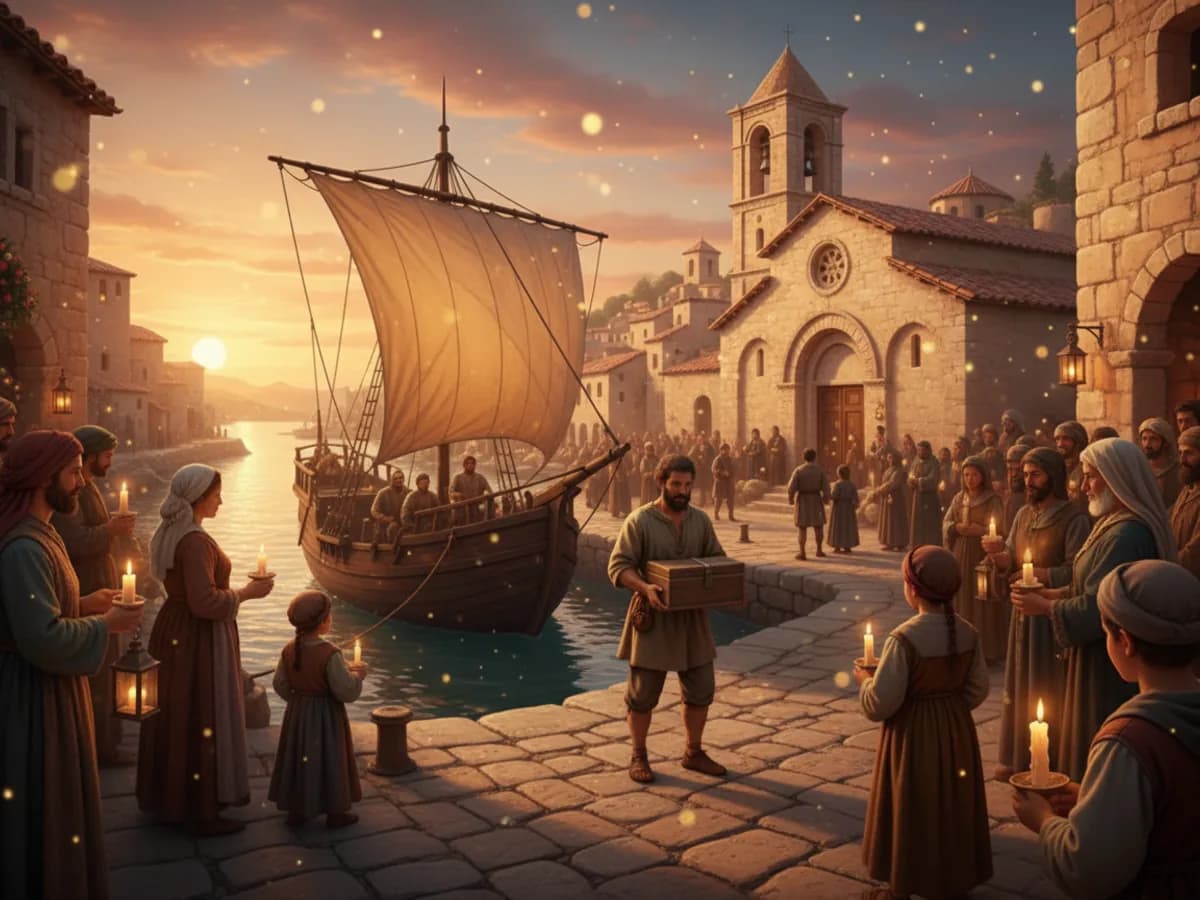
In the spring of 1087, sailors from Bari landed at Myra, then under Muslim rule, and carried off most of the skeleton under the noses of its Greek guardians. They won a race against Venice, which wanted the same prize. On May 9, 1087, the bones arrived in Bari, on the heel of Italy. Two years later, in 1089, Pope Urban II consecrated the crypt of the new basilica and laid the relics beneath its altar, where they still rest. The building was finished and consecrated in 1197.
Venice did not give up. According to an anonymous chronicle, a Venetian fleet stopped at Myra in 1100 and gathered the fragments the men of Bari had left behind. The church of San Nicolò on the Lido says it holds about five hundred of them. On December 28, 2009, Turkey asked Italy to return the bones.
- 1087On May 9, the relics land in Bari after being taken from Myra.
- 1089Pope Urban II consecrates the crypt of the Basilica of Saint Nicholas in Bari.
- 1100Venetians carry the fragments left in Myra to the Lido.
- 1950sThe anatomist Luigi Martino examines the bones: a man who died past 70, of average height, with severe arthritis.
- 2017A rib leaves Bari for Moscow and Saint Petersburg, from May 21 to July 28.
The bones have been studied. In 2004, Caroline Wilkinson and Francesco Introna at the University of Manchester rebuilt a face from the skull measurements: a man about 5 feet 6 inches tall, with a nose that had been broken and healed. In December 2017, at Oxford, Tom Higham and Georges Kazan radiocarbon-dated a pelvis fragment kept by a priest in Morton Grove, Illinois, which had come from Lyon in France. The result: fourth century. The researchers stressed that science can prove a relic is false, never that it is genuine.
That same year, one of the saint’s ribs left Bari for Russia, where Nicholas is among the most beloved saints. According to Vatican Radio, about two million pilgrims queued, sometimes for hours, at the Cathedral of Christ the Saviour in Moscow and then at the Alexander Nevsky monastery in Saint Petersburg, before the relic flew back to Italy on July 28, 2017.
Why is Saint Nicholas the patron saint of Lorraine?
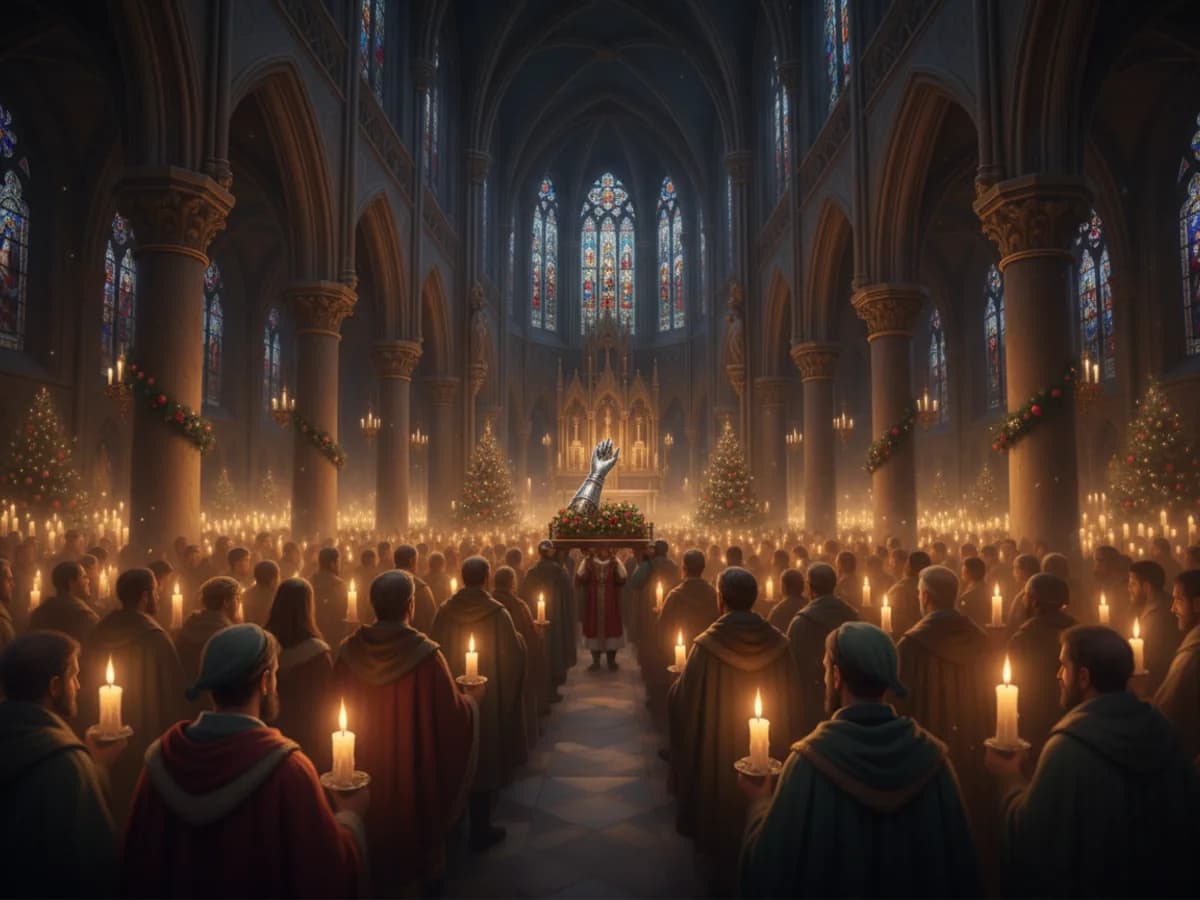
It all starts with a finger. According to tradition, in 1098 a knight from Lorraine, Aubert de Varangéville, brought a finger bone of the saint from Bari to Port, a trading town on the Meurthe river that would later be renamed Saint-Nicolas-de-Port. The Latin inscription on today’s reliquary spells it out: "Hic anno salutis 1098 Albertus de Varangisi Villa attulit sacram particulam," in this year of salvation 1098, Albert of Varangéville brought the sacred fragment. The silver arm with its hand raised in blessing, 75 centimeters (about 30 inches) tall, was made in Lyon by the firm Berger et Nesme around 1892, replacing older reliquaries given by the dukes that no longer survive.
The candlelight procession grew out of another miracle. The lord of Réchicourt, a crusader from Lorraine held prisoner in the East, is said to have been freed on December 6, 1240, and found on the church steps with his chains still on his wrists. Ever since, the procession has been held every year on the Saturday closest to December 6. After the service the basilica goes dark, candles are lit one by one, and the crowd sings "Saint Nicolas des Lorrains," a hymn of more than forty verses.
On January 5, 1477, Duke René II defeated Charles the Bold of Burgundy beneath the walls of Nancy. Charles was killed, Lorraine stayed independent, and René II made Nicholas the patron of his duchy. To thank the saint for his victory, he replaced the small church at Port with a huge Flamboyant Gothic basilica, built from 1481 to 1560, with two towers 85 meters (about 280 feet) high.
Five centuries later, the building needed care. It was restored over some fifteen years, through the 1980s and 1990s, thanks to a bequest from Camille Crouée Friedman, a daughter of the town who had moved to New York and died in 1980. Saint Nicholas, who came from Asia Minor by way of Italy, was rescued in Lorraine by an American.
How is Saint Nicholas Day celebrated in Lorraine today?
In Nancy, the festival matters enough to appear on the French Ministry of Culture’s inventory of intangible cultural heritage. The big parade dates back to the late 19th century, and the first Saint Nicholas float was built in 1924 with help from the city’s shopkeepers. In 2017, nearly 100,000 people watched the parade alone, and 15 to 18 parades took place across the metropolitan area during December.
The procession follows a set order over 1.3 kilometers, a little under a mile. The towns’ floats come first, then the three characters from the legend: Père Fouettard on his mechanical donkey, the butcher shouting at the crowd from his papier-mâché shop, and the three children in the salting tub. Saint Nicholas closes the parade on a glowing float, surrounded by small, well-behaved children. When he reaches Place Stanislas, the mayor hands him the keys to the city from the town hall balcony. In 2017, more than two tonnes of candy were handed out along the route.
The other tradition is edible. Gingerbread and chocolate Saint Nicholas figures have been made in Nancy since 1840, first by the Lefèvre-Lemoine confectioners. From 1902, the confectioner Joseph Eidel was the first to draw a face on them, with eyes and a smile, in addition to the beard, crozier and mitre. You will find ideas for baking your own in our Christmas recipes.
- The Saturday closest to December 6: candlelight procession in Saint-Nicolas-de-Port.
- The same weekend: the big parade in Nancy, with smaller ones in Metz, Épinal, Verdun and Saint-Dié-des-Vosges.
- The night before: a sugar lump or a carrot for the donkey, sometimes a drawing or a letter for the saint.
- In the morning: treats and gingerbread for good children, and a dreaded visit from Père Fouettard for the rest.
The feast has even traveled back the other way. In Wiltz, Luxembourg, American soldiers discovered the custom after the country’s liberation in September 1944. On December 6, 1944, Corporal Richard Brookins, dressed as Saint Nicholas, rode through the streets handing out candy and chocolate from the GIs’ rations. For one evening, the American Santa Claus became Saint Nicholas again.
Sources
- St. Nicholas Center, Who is St. Nicholas?
- St. Nicholas Center, Saint Nicolas (The Legend of Saint Nicholas song)
- St. Nicholas Center, Bishop Nicholas Loses His Cool (Council of Nicaea, Theodore the Lector)
- Wikipedia, Saint Nicholas
- Wikipedia, Basilica of Saint Nicholas, Bari
- French Ministry of Culture, POP heritage database, Arm reliquary of Saint Nicholas, Saint-Nicolas-de-Port
- French Ministry of Culture, Intangible cultural heritage inventory, Les fêtes de Saint-Nicolas à Nancy
- Aleteia, La procession de nuit de la Saint-Nicolas à Saint-Nicolas-de-Port, 2017
- French Moments, Saint-Nicolas-de-Port Basilica
- Vatican Radio, Relics of St Nicholas return to Bari after Russian tour, 2017
- HeritageDaily, Ancient bones suggest Santa could be real (University of Oxford), 2017