It's the question that keeps kids sitting up straight at dinner all through December. How can Santa know, all the way from the North Pole, who cleaned their room and who pulled their sister's hair? Children have their theories: hidden elves, a spyglass, a magic notebook.
The North Pole Archives can confirm at least one thing: the notebook exists, and we know when it first appeared in print. It shows up in an engraving by Thomas Nast published on December 29, 1866. Before that, a New York booklet from 1821 was already sorting good children from the rest. After it, a 1934 song turned the list into a tune the whole world knows. Here is the complete file.
How does Santa know if you've been good?
The stories give several answers, and they fit together. The first is a ledger: Santa writes down how children behave in a big book, as Thomas Nast showed as early as 1866. The second is a very sharp ear. In 1927 the Finnish radio host Markus Rautio announced that Santa lives on Korvatunturi, in Lapland, the “Ear Fell,” whose shape is said to let him hear the wishes of every child on Earth.
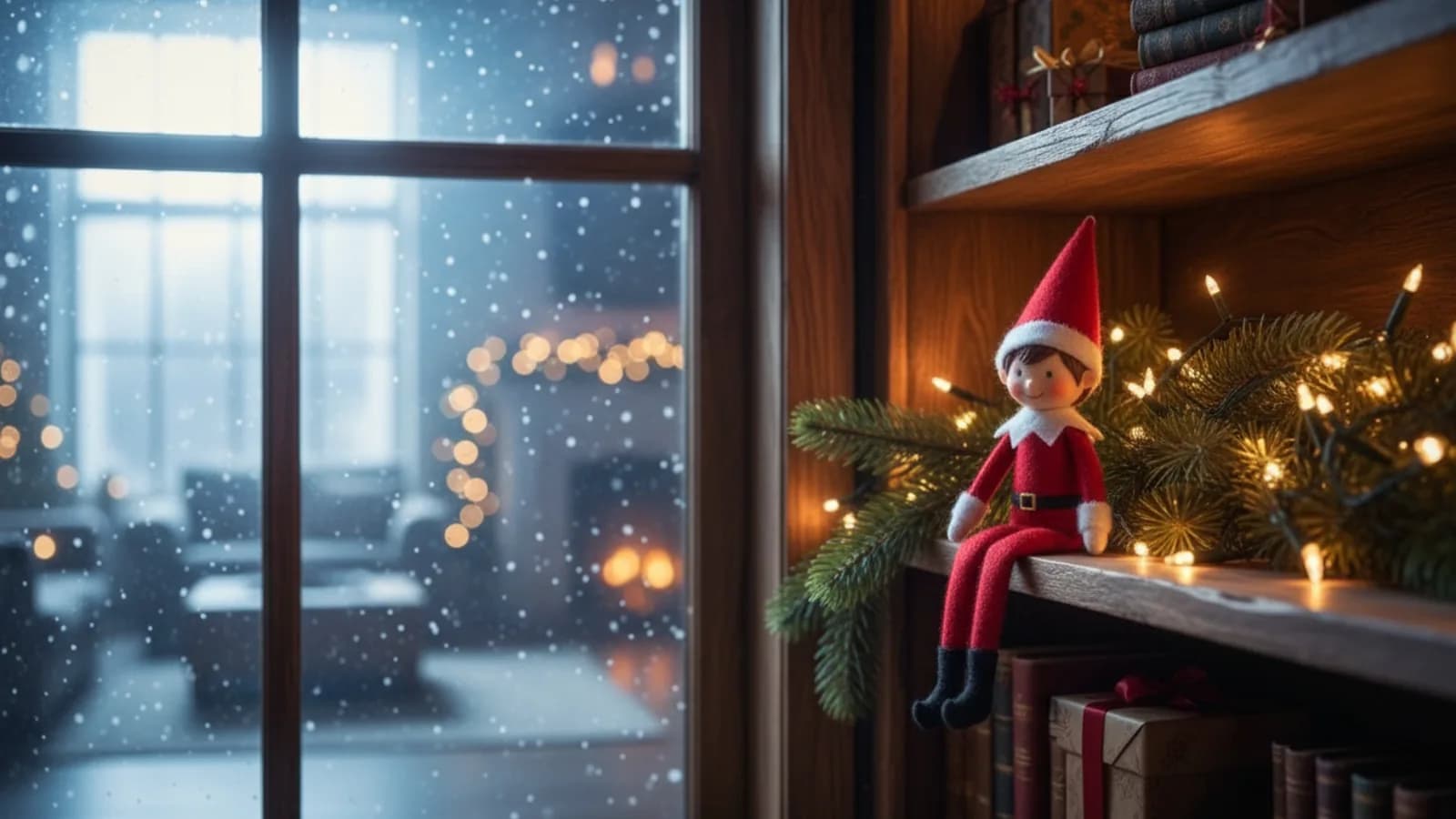
The third answer is his helpers. In the countries Saint Nicholas visits, the big red book is kept up all year, and the saint checks it before filling the shoes. Closer to home, since 2005, an elf sitting on a shelf is supposed to fly back to the North Pole every night to report: that's the idea behind the Elf on the Shelf, covered in our guide for parents.
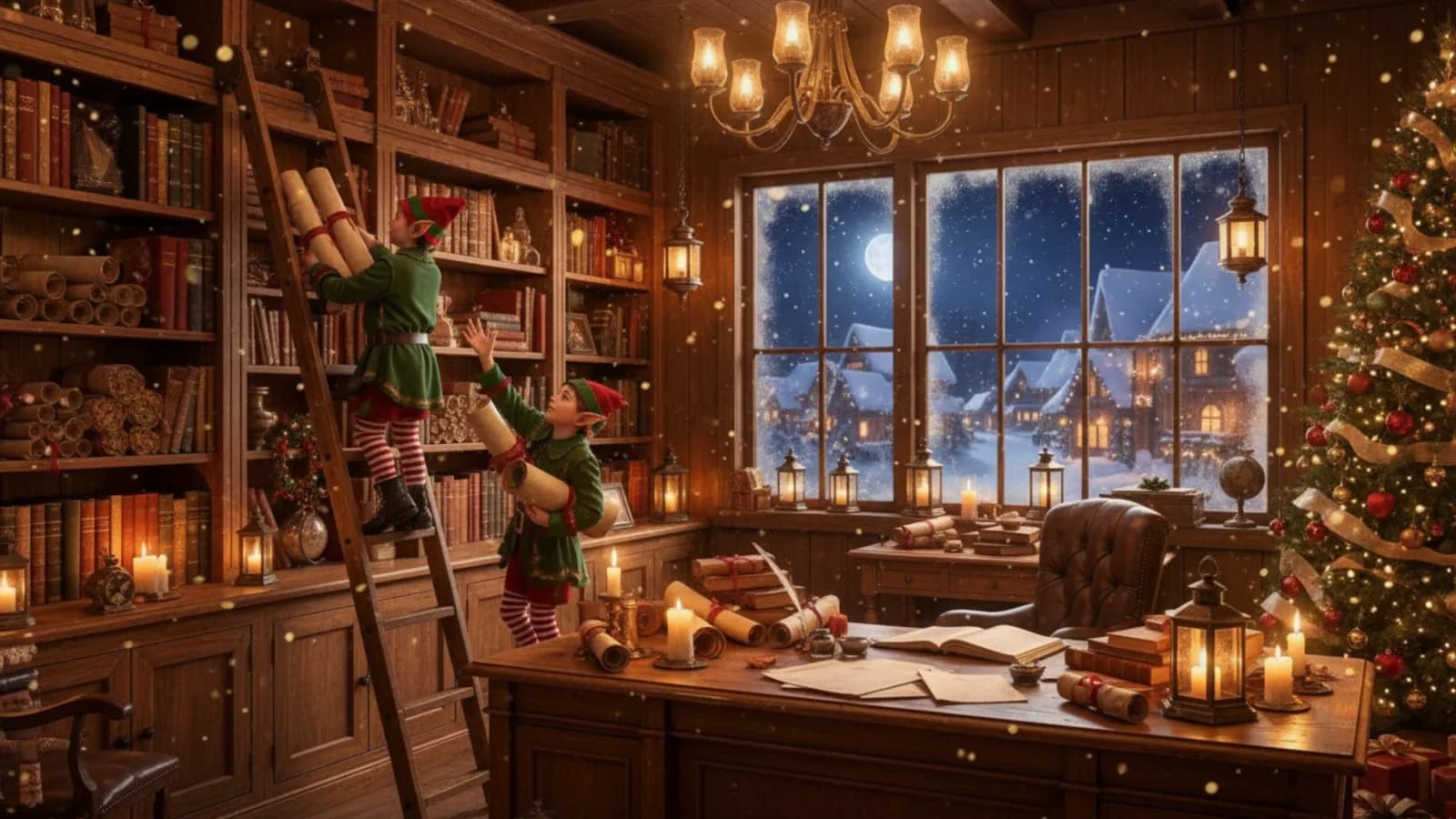
That leaves the most direct source of all: the children themselves. In L. Frank Baum's 1902 story “The Life and Adventures of Santa Claus,” a helper named Kilter, “the silent and swift,” is in charge of gathering children's letters. Every letter tells a little about the year of the child who wrote it, and Santa reads them all.
None of these texts claims that Santa counts mischief one item at a time. They all talk about an overall picture, a whole year. That's why one bad day doesn't make a bad year, as we'll see at the end of this file.
How long has Santa kept a record of behavior?
The oldest picture we know of dates from December 29, 1866. That day Harper's Weekly ran a double-page engraving by Thomas Nast, “Santa Claus and His Works.” The Picker Art Gallery at Colgate University holds a copy, given by Thomas Nast III, a descendant of the artist. When Nast collected his Christmas drawings in a book in 1890, the captions were printed with them.
- “On the look out for good children”: Santa keeps watch for good children.
- “Account book, record of behaviour”: the ledger itself.
- “Work-shop”: where the toys get made.
- “Santa Claus stable”: home to his animals.
The same collection has another delightful drawing, “Santa Claus's Rebuke.” A little boy promises “I'll never do it again,” and a note addressed to Santa reads “Tommy has been such a naughty boy,” signed “Papa and Mama.” The scene shows that, as far back as the nineteenth century, parents were considered excellent informants.
Nast's ledger belongs to a city, New York, where the character of Santa was built step by step. The rest of the story, from the bishop of Myra to Harper's Weekly, is told in the true story of Santa Claus.

What did naughty children get in 1821?
Forty-five years before Nast, the sorting of good from not-so-good is already there. In 1821 the New York printer William B. Gilley published “The Children's Friend,” a small booklet with eight colored engravings, meant for “the little ones from five to twelve.” Its poem, “Old Santeclaus with Much Delight,” has the visitor arrive on Christmas Eve rather than December 6.
To good children, Santeclaus brings “rewards,” as the caption on the first engraving calls them: pretty books, dolls, balls, apples. Where he finds children who have misbehaved, he leaves something else: a long, black birch rod, which parents are invited to use.
I left a long, black, birchen rod, Such as the dread command of God Directs a Parent's hand to use.
The most famous poem, two years later, says nothing about punishment at all. The visitor in “A Visit from St. Nicholas,” printed in 1823, fills the stockings without judging anyone and leaves wishing “Happy Christmas to all.” Little by little, the birch rod dropped out of Santa's stories.
Where does the list he's “checking twice” come from?
From the song “Santa Claus Is Comin' to Town,” written in 1934 by composer J. Fred Coots and lyricist Haven Gillespie, and published by Leo Feist. It tells us that Santa makes a list, checks it twice to find out who's been good, and even knows when you're sleeping and when you're awake. The lyrics are still under copyright, so we don't quote them here, but everyone can hum them.
The first known recording is by Harry Reser and his orchestra, on October 24, 1934, with Tom Stacks singing. The hit came the next month, when Eddie Cantor sang it on his radio show in November 1934. According to Wikipedia, more than 30,000 records and 500,000 copies of sheet music sold within twenty-four hours of the broadcast. Other sources give smaller numbers, but they all describe an instant success.
Ever since, the list “checked twice” has been the best-known picture of Santa's ledger. On December 13, 1970, ABC aired a Rankin/Bass animated special with the same title. In it a mailman tells the story of Santa's youth, how he was raised by a family of toymaking elves, the Kringles, and how he met the schoolteacher Jessica, whom we meet again in does Santa Claus have a wife.
What's in Saint Nicholas's big book?
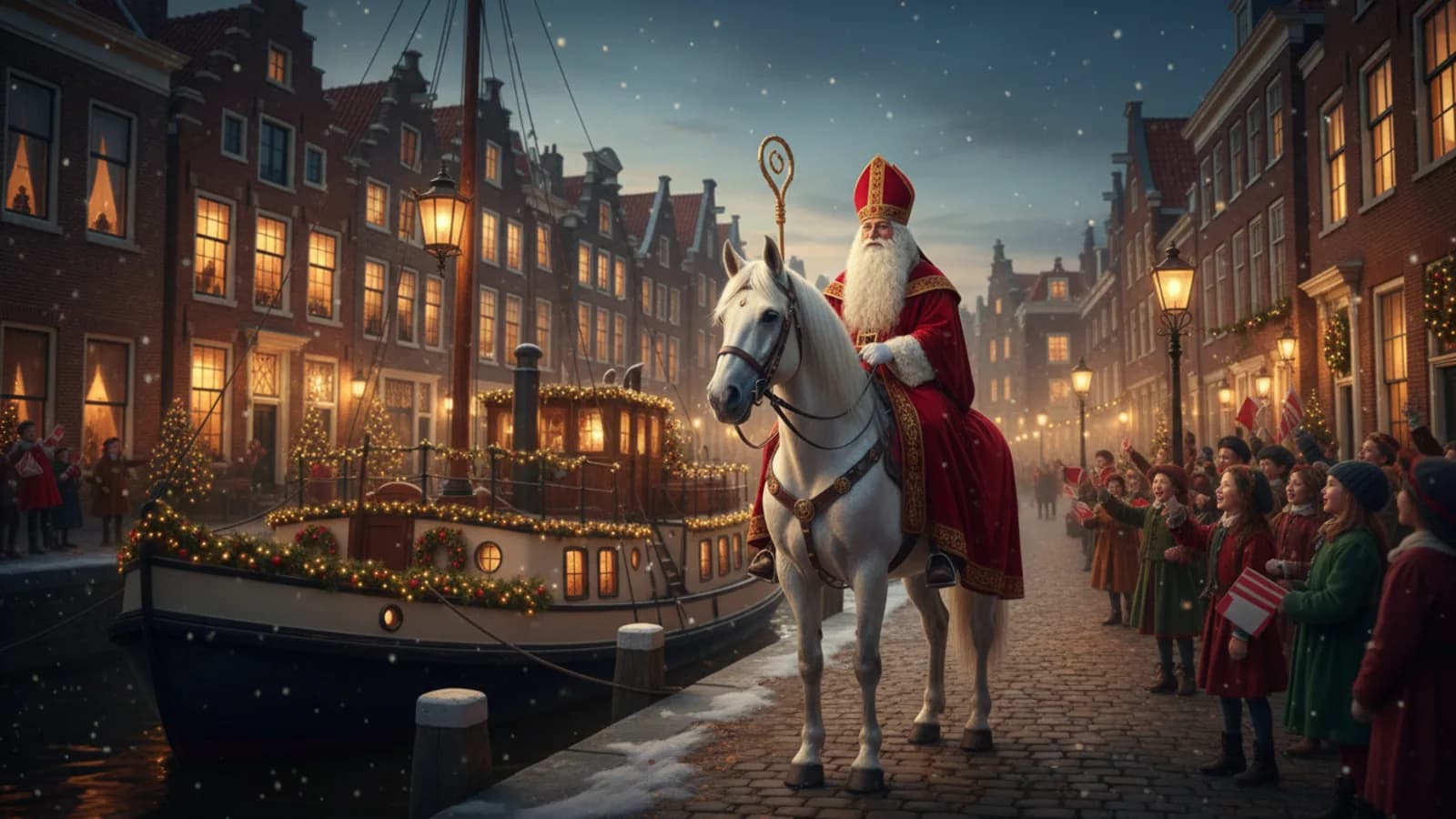
In the Netherlands and Belgium, Sinterklaas never travels without a big red book. Tradition says he records in it, over the course of the year, whether each child has been good or not. He arrives by steamboat in mid-November, on the first Saturday after November 11, and the presents come on the evening of December 5, *pakjesavond*, “gifts evening.”
The old songs were more threatening. They said disobedient children could be stuffed in a sack and carried off to Spain, and the saint's companion carried a birch rod, the *roe*, to spank them. Modern versions have dropped both threats. What remains is the book, and the shoes set out by the fireplace, which the saint fills with candy or a small present.
Saint Nicholas has played this role of kindly judge for a long time, and his feast on December 6 keeps the memory of it all over Europe. Who the bishop of Myra was, and why he watches over children, is the subject of who was Saint Nicholas.

Who punishes naughty children?
In France the job goes to Père Fouettard, “Father Whipper.” Dressed in black and carrying a big bundle of sticks, he goes along with Saint Nicholas on the night of December 5, according to the travel guide Le Routard. France's official tourism site adds that he walks with the saint in much of the country, that he is called Hans Trapp in Alsace and Ruppelz in Lorraine, and that he stays away from Boulogne-sur-Mer, where the saint parades alone.
In Lorraine, Saint Nicholas has been the region's patron since 1477. On the morning of December 6, children find treats or coal depending on how they behaved, and his usual gifts are an orange and a gingerbread shaped like him. In Nancy, the big parade carries the saint, Père Fouettard, the butcher and the three children of the legend on a float.
In the Austrian and Bavarian Alps, the companion is Krampus. Horned and hairy, birch rods in hand, he takes to the streets on the evening of December 5, Krampusnacht. In Italy, La Befana comes on the night of January 5 and leaves coal for children who misbehaved, usually black rock candy. All these visitors are introduced in Christmas gift bringers around the world.
What happens if you're on the naughty list?
The old stories talk about coal and birch rods. Today's stories are much gentler, and so is the North Pole ledger. A list covers a whole year, not one bad day. A child who fights with his brother on Tuesday and helps him tidy up on Wednesday has already made it halfway back.
- Make it right: a sincere “sorry” counts, especially when nobody had to ask for it.
- Help out: set the table, comfort a friend, share a toy.
- Say so: a letter to Santa is the perfect place to tell him about your efforts.
- Check in: the nice detector shows which way things are leaning, and the nice list shows who has already made it.
The visitor in the 1823 poem sets the example, too: he fills every stocking without sorting anyone out and wishes “Happy Christmas to all.” For the rest of his talents, from flying reindeer to rising up the chimney with a nod, see what powers does Santa have.
Sources
- Colgate University, Picker Art Gallery, Thomas Nast, “Santa Claus and His Works,” Harper's Weekly, December 29, 1866
- Project Gutenberg, Thomas Nast, “Thomas Nast's Christmas Drawings for the Human Race,” Harper & Brothers, 1890
- Wikipedia, “Old Santeclaus with Much Delight” (The Children's Friend, 1821)
- Academy of American Poets, Poets.org, “A Visit from St. Nicholas” (1823)
- Wikipedia, “Santa Claus Is Comin' to Town” (song, 1934)
- Wikipedia, “Sinterklaas”
- Le Routard, “Saint-Nicolas et Noël en Lorraine”
- France.fr (Atout France), “Où fêter la Saint-Nicolas en France ?”
- Wikipedia, “Korvatunturi”
- Yle News, “Christmas special: How Santa became Finnish,” 2019
- Wikipedia, “Santa Claus Is Comin' to Town” (TV special, 1970)
- Wikipedia, “Krampus”
- Wikipedia, “Befana”
- Project Gutenberg, L. Frank Baum, “The Life and Adventures of Santa Claus” (1902, full text)