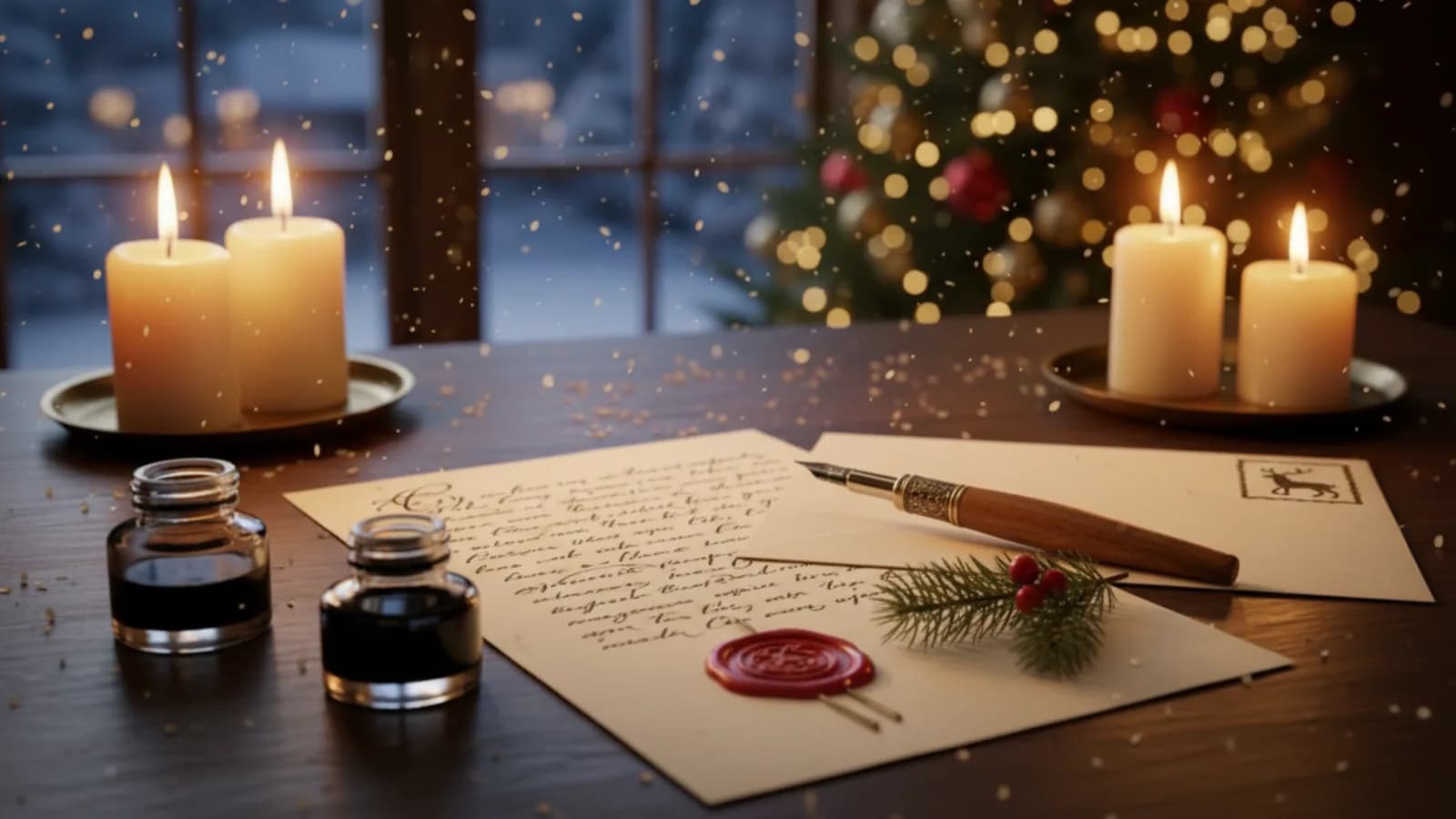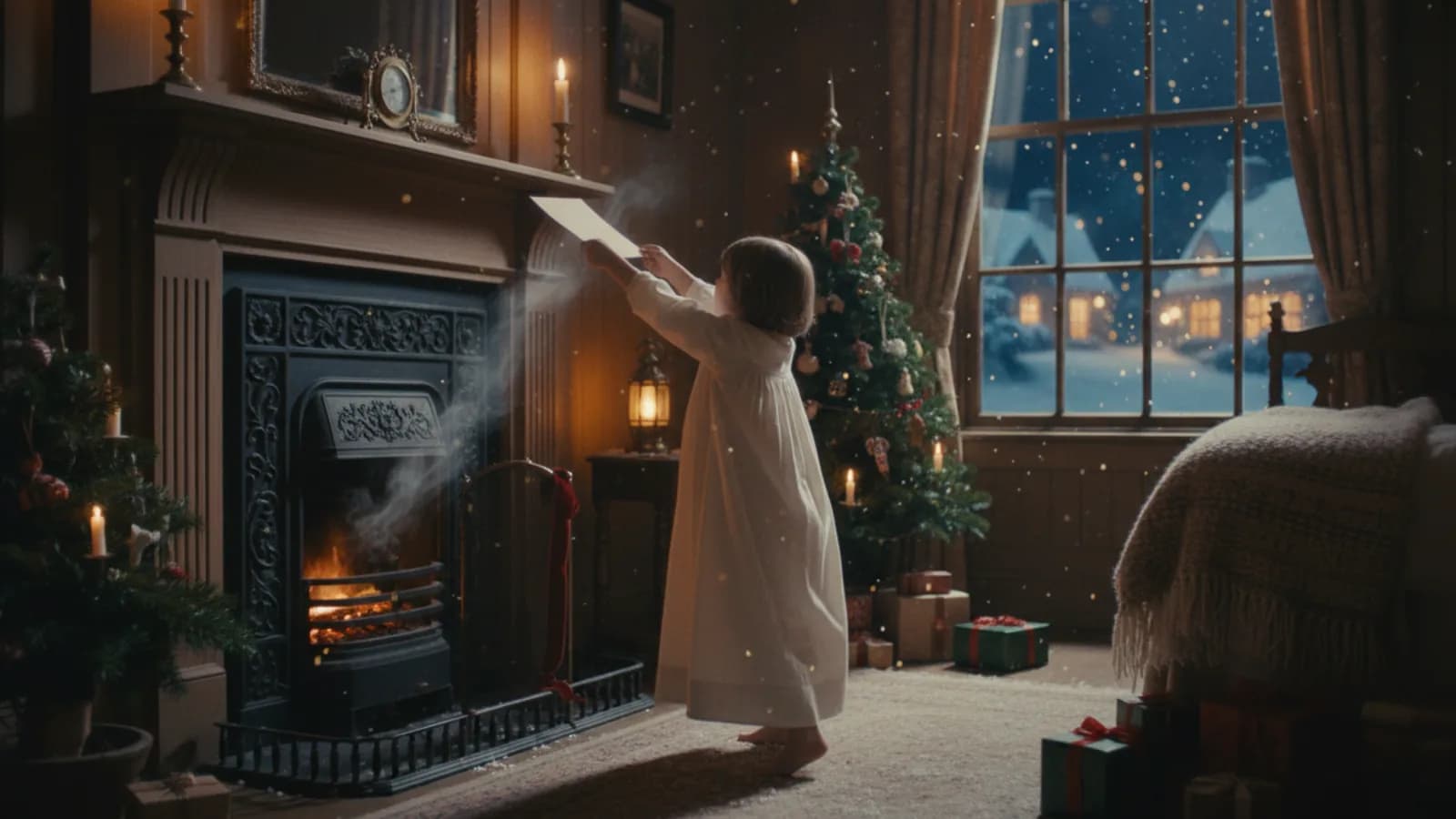
On Christmas Eve 1911, in Terenure, a suburb of Dublin, two children slipped a letter into the flue of their bedroom fireplace. They asked for a baby doll, a waterproof with a hood, a toffee apple and “a long toffee.” The letter stayed stuck in the brickwork until 1992, when the man then living in the house, John Byrne, found it while putting in central heating.
That sooty sheet of paper sums up a century and a half of history. Children were writing to Santa long before anyone took on the job of writing back. It took parents willing to hold the pen for him, a New York cartoonist, local newspapers, postal clerks who ignored their rulebook and, in 1962, a French cabinet minister and his psychoanalyst sister. Here, piece by piece, is how the letter to Santa found its way.
How did kids send letters to Santa before the post office?
Up the chimney. The historian of the United States Postal Service puts it plainly: one popular early method was to put the letter in the fireplace, because smoke was believed to carry wishes to the North Pole. Some children burned the letter, others tucked it into the flue for the visitor to find on his way down. Mental Floss reports that in Scotland, some children stuck their heads up the chimney and shouted their wishes.
The logic is simple: if Santa comes in through the chimney, that is where you leave the mail. We trace how the chimney became his front door in Why does Santa come down the chimney?. The Dublin letter, signed “A or H Howard,” was found exactly where its authors had placed it: in the flue of the front bedroom, so Santa would see it. The 1911 census lists three children at the address, including Hannah, 10, and Fred, 7.
Around the turn of the century, the chimney started losing ground. In December 1901, the Chicago Daily Tribune noticed that children were now trusting their letters to the mail. Some addressed them with great care, like the boy who wrote to “Mr. Santa Claus, Frost Mansion, In the Land of Snow, North Pole.”
Whereas in former days [children] were accustomed usually to consign [Santa letters] to the fireplace... children today, as a rule, have more faith in the post.
Who wrote the first letters from Santa?
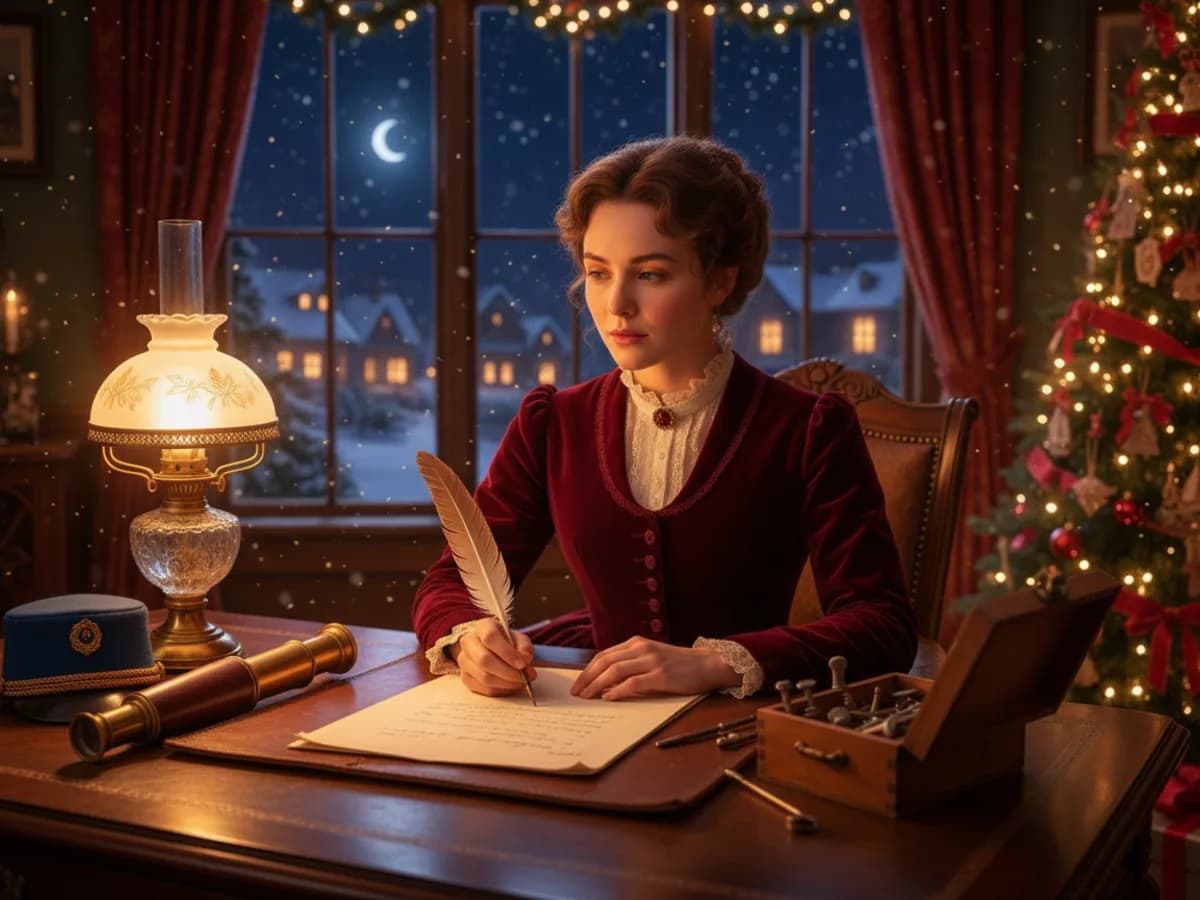
Parents did, long before postal workers. In Cambridge, Massachusetts, Fanny Appleton Longfellow, wife of the poet Henry Wadsworth Longfellow, kept up a correspondence between her children and Santa Claus for several years. The family papers, held by the National Park Service, include letters to “SANTI CLAUS” from her sons Charles and Ernest, and replies addressed to Charles, Ernest and Alice. The handwriting on those replies closely resembles Fanny's own.
Ernest's letter, written in the early 1850s when he was somewhere between six and ten, asks for a soldier cap, a cartridge box with a silver eagle on it, a box of carpenter's tools and a “SPIE GLRS,” a spyglass with some creative spelling. Each gift is drawn next to its name, along with the family house on Brattle Street and a small sleigh in the corner of the page.
Santa's replies praised the children for their good deeds and gently scolded them for bad habits. On Christmas Eve 1851, Charley was told off for not being kind enough to his little brother.
I am sorry I sometimes hear you are not so kind to your little brother as I wish you were.
In England, the best-known example comes from Oxford. From 1920 to 1943, J. R. R. Tolkien wrote a letter from Father Christmas to his children every Christmas Eve. It began because his eldest son John, aged three, had asked who Father Christmas was and where he lived. According to the University of Oxford, some letters came with the regular postman, whom Tolkien had let in on the secret, while others turned up by the hearth, carrying North Pole stamps priced at “2 kisses.”
How did newspapers get children writing to Santa?
On December 30, 1871, the cover of Harper's Weekly showed Santa at his desk, buried in his mail. The drawing was by Thomas Nast, who had been drawing Santa for the magazine since 1863. Santa sorts his letters into two piles, one for good children and one for naughty ones. Mental Floss notes that reports of Santa letters at post offices rose the year after the cartoon appeared.
Local papers picked up the idea. In 1901, the Monroe City Democrat in Missouri offered “two premiums” for the best letter to Santa. In 1922, the Daily Ardmoreite in Oklahoma gave prizes for the top three. The winning letters were printed in the paper, often with the child's home address, a practice that would make any editor wince today.
Newspapers also got letters that asked for no toys at all. In 1897, eight-year-old Virginia O'Hanlon wrote to The Sun in New York to ask whether Santa was real, because her father had told her, “If you see it in THE SUN it's so.” Editor Francis P. Church wrote the reply. Her letter is still kept by her family. We look at that answer and what it can teach parents in How to tell your child the truth about Santa.
When did the Post Office start answering letters to Santa?
At first, it didn't answer them at all. Postal rules classed letters with “fictitious” addresses as unmailable. They went back to the sender if possible; if not, to the Dead Letter Office in Washington, D.C., where clerks opened them, tried to identify the child and then destroyed them. Opening someone else's mail was a crime, even for a postal worker.
Some employees broke the rules anyway. In the mid-1890s, clerks at the Dead Letter Office let a “rich old man” take twenty or thirty Santa letters a year and grant the children's wishes. In 1894, Harris Eames, postmaster of West Haven, Connecticut, opened a letter from a seven-year-old girl named Fannie addressed to “Sandy Clous.” He knew the family, rallied the town's shopkeepers, and two days later, on Christmas Eve, a pile of presents sat waiting at her front door.
- 1907On December 13, Postmaster General George von L. Meyer lets postmasters pass Santa letters to charities.
- 1908Permission withdrawn: Santa mail at the New York Post Office had grown more than 13-fold, and charities had no time to check the requests.
- 1911On November 1, Postmaster General Frank H. Hitchcock restores the permission.
- 1912Hitchcock renews it. USPS dates its Letters to Santa program from this year and marked the centennial in 2012.
- 1913The rule is written into the Postal Laws and Regulations, where it has stayed ever since.
By the early 1950s, some charities called their gift drives “Operation Santa Claus.” The name stuck to the New York City Post Office program, where the public comes to “adopt” letters at the James A. Farley Building on Eighth Avenue. New York alone receives more than half a million letters a season.
The rules tightened to protect children. In 2006, USPS issued national guidelines and required adopters to show photo ID. Since 2009, the child's address has been blacked out and replaced with a number: the donor brings the gift back to the post office, which mails it without the donor ever seeing the address. In 2017, a pilot let New Yorkers adopt letters online. In 2020, online adoption opened nationwide, drawing more than a million visitors and more than 21,000 packages.
How did the French post office start writing back?
France had the same problem under even stricter law. A letter with no known addressee went to the Dépôt central des rebuts, the dead letter office at the main Paris post office, 52 rue du Louvre. Set up by a royal ordinance in 1771, it was the only service allowed to break the secrecy of correspondence to trace a recipient. With no address on file for Father Christmas, children's letters were destroyed there.
In January 1958, the French postal staff bulletin mentioned “the abundant mail of Père Noël” for the first time. Letters came from all over France, but also from North Africa, Guinea and Madagascar, and in the north of the country Saint Nicholas often replaced Père Noël on the envelope. In December 1959, the same bulletin gave a figure: about 4,000 letters a year reached the dead letter office.
The village postmistresses who wrote back in secret
Out in the provinces, a few postmistresses quietly broke the law. Odette Ménager, postmistress of Nueil-sur-Layon in the Loire valley from 1948 to 1956, answered children in Santa's name using a “shaky” hand, the writing of a very old man, and mailed the replies without stamps. She kept the secret until her death in 1977.
In Veules-les-Roses, in Normandy, Magdeleine Homo did the same in the early 1950s. She signed “Le Père Noël,” stuck on old stamps and added “par avion” to make it look authentic. Her letter carrier, Juliette Leboucher, who knew every family in the village, helped her tailor the advice. Around 1958 she asked for official permission and got it, from headquarters and, it was said, from the minister himself. A few years later, swamped, she had to give up.
The postal administration took over in 1962. Jacques Marette, minister of Posts and Telecommunications from April 1962 to April 1967, set up a national Santa mail service. The first reply card was drawn by René Chagnard, known as Chag: a mail carrier in his cap hands Père Noël his mail at the top of a chimney. The text was written by the minister's sister, Françoise Dolto, not yet famous. As a five-year-old, she had written to Père Noël herself to ask for a little toy mailbox.
That first year, 2,000 cards went out. In 1963, the service received 18,300 letters but could answer only about 5,000: just 28% had the child's address on the back, a habit families had not yet picked up.
Why do French letters to Santa go to Libourne?
Because the dead letter office moved there. The Paris office was running out of room, and Georges Pompidou's government wanted to move public services out of the capital. On November 26, 1965, the mayor of Libourne, near Bordeaux, Robert Boulin, put the plan to his town council. On March 20, 1967, the office opened among the vineyards, at a place called Les Grandchamps, under a new name, the Centre de recherche du courrier.
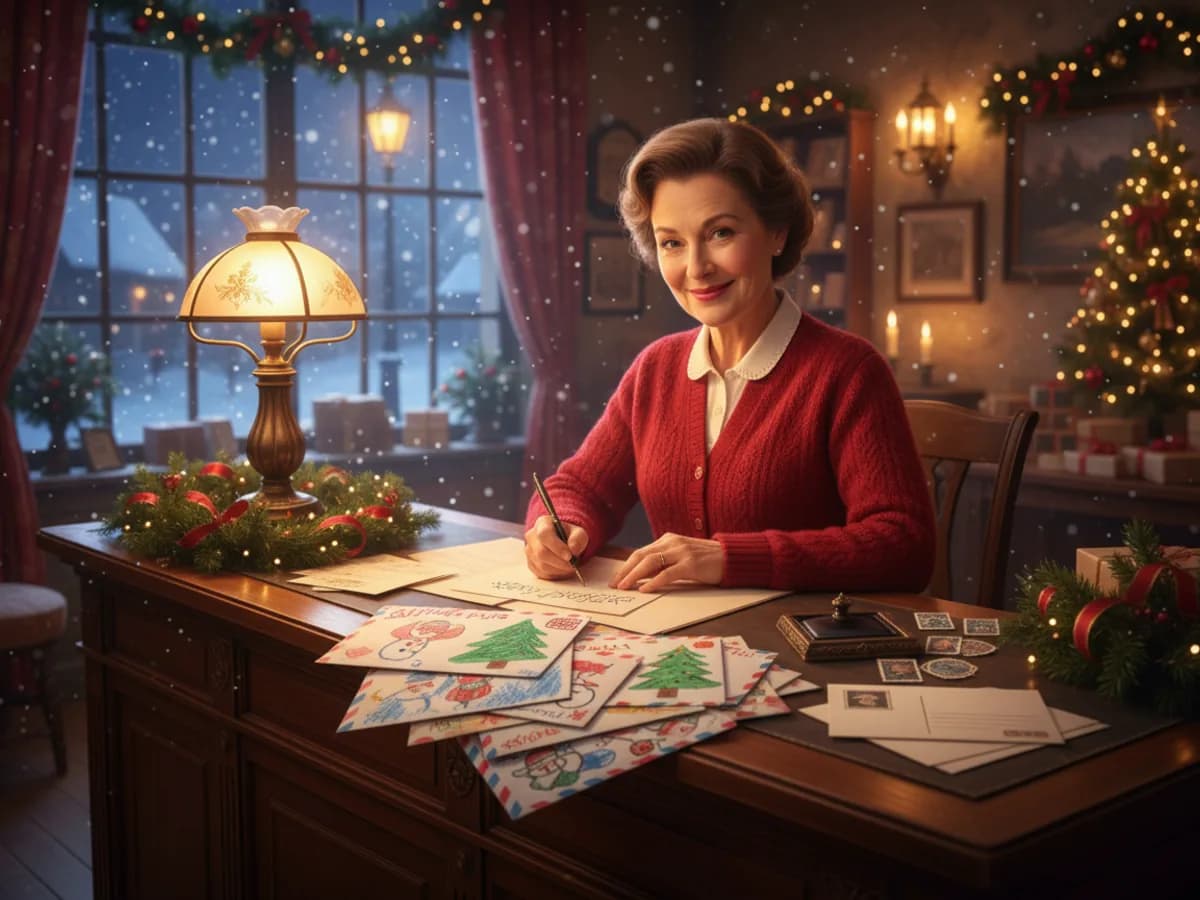
The next years were bumpy. In 1968, after the May strikes, mail was six months behind, the service was cancelled and 96,000 letters went unanswered. It came back in 1969. In January 1970, the ministry magazine Postes et Télécommunications described it for the first time as the “Secrétariat du Père Noël,” Santa's Secretariat. The first secretary hired for the job, Maryvonne Large, worked with 18 women clerks. In December they had to keep up a pace of “one reply a minute.”
In 1972, the team that designed the cards gave itself a charter. The text had to change every year while staying recognizable, since many children wrote four or five years running. It had to be readable from kindergarten up. It must never state outright that Père Noël exists, only let the child infer it. And it should hint gently that Père Noël has a lot of work and cannot get everything. The oil shock and the strikes of 1974 still left 72,000 letters unanswered.
The Secretariat is still in Libourne. In 2025, it reopened on November 19 with 60 elves and a guest writer, author and filmmaker Nicolas Vanier, after Michel Bussi and Olivia Ruiz the year before. La Poste says it helps more than a million children a year, sets up special mailboxes in more than 2,300 post offices and also replies in English. Children write “Père Noël” on the envelope and their address on the back, before December 20. Your child can also write from our letter to Santa page.
Which countries answer letters to Santa?
Several national post offices followed. The exact addresses and how to fill in the envelope are in Where does Santa Claus live?. The dates that matter follow.
- Austria, 1950: the post office in Christkindl, near Steyr, opened that year. It answers letters to the Christ Child and sends out about 1.5 million items each season with its Christmas stamp and postmark.
- Canada, 1982: Canada Post began counting letters to Santa, postal code H0H 0H0. By 2013 the total topped 21.8 million, with replies in more than 30 languages, Braille included.
- Finland, 1985: Santa Claus' Main Post Office, on the Arctic Circle near Rovaniemi, has received letters since then, more than 15 million from 198 countries, and about half a million a year today. Every item gets an Arctic Circle postmark.
- United States, 2020: online letter adoption opened to the whole country.
The idea has not changed since Fanny Longfellow: an adult reads the letter carefully and takes the time to write back. If your child is working on one, our letter to Santa page walks them through it, and How to keep the Christmas magic alive has more ideas for what comes next.
Sources
- Comité pour l'histoire de La Poste, Antoine Georget and Valérie-Inés de La Ville, “L'Opération Père Noël a 50 ans,” 2012
- La Poste, “Le Secrétariat du Père Noël rouvre ses portes,” press release, November 18, 2025
- United States Postal Service, Historian, “Santa Letters: Gateway to Kindness,” 2013
- United States Postal Service, Postal Bulletin, “Celebrate 100 Years of the Letters to Santa Program,” 2012
- United States Postal Service, “USPS Operation Santa”
- National Park Service, Longfellow House-Washington's Headquarters, “Santa Claus Letter,” 2014
- Mental Floss, Alex Palmer, “10 Historical Facts About Santa Letters,” 2017
- University of Oxford, GLAM, “Tolkien's magical letters and illustrations bring Father Christmas to life”
- The Irish Times, “Dear Santa: letter sent 100 years ago found up chimney,” 2011
- University of Cambridge, Centre for Material Texts, Lucy Razzall, “Dear Santa,” 2011
- CBS News, “Yes, Virginia: the story behind the letter about Santa Claus”
- Canada Post, “Postal elves ready to help Santa's post office,” 2013
- Wikipedia, Santa Claus' Main Post Office
- Santa Claus Village, Santa Claus Main Post Office
- Upper Austria Tourism, “70 Jahre Postamt Christkindl”